
Official Store
8381-2 Rue Berri, Montréal, Quebec, H2P 2G3
Choose this branchNews ·
By Les Délices Feuillus
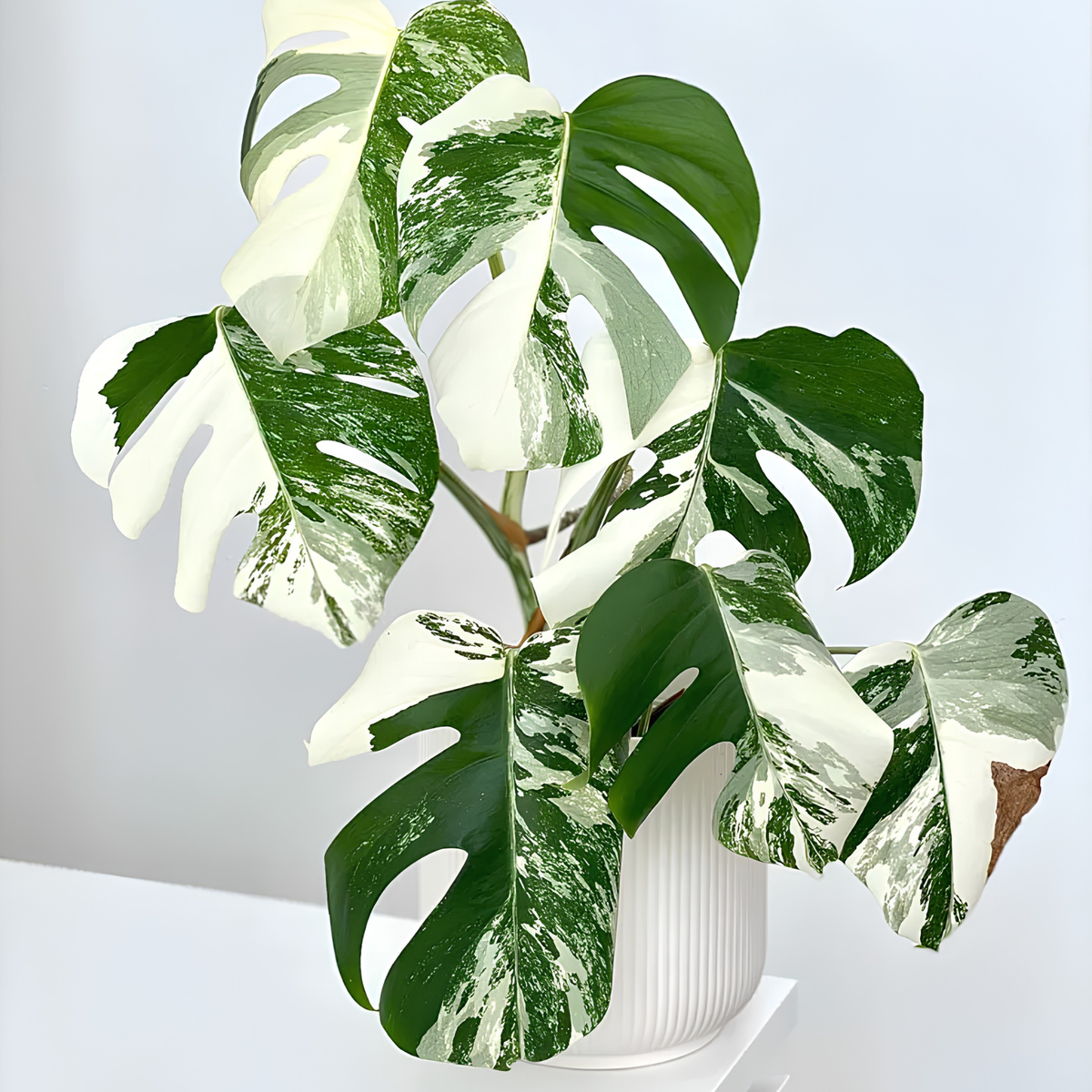
Every bottle of fertilizer carries a feeding schedule, and almost none of it was written with an indoor aroid in mind. Following it to the letter is one of the more common ways to hurt a plant that was otherwise doing fine.
Fertilizer feeds growth, and growth is driven by light. A plant on a bright east window in June can use a full dose; the same plant in a dim corner in November is barely growing at all, and that unused fertilizer just accumulates as salt in the soil. When in doubt, feed at half the bottle's strength — most indoor collections are over-fed, not under-fed.
From roughly October to March, most of what we sell is not actively growing. Feeding a dormant plant does not wake it up; it sits in the medium and can burn fine roots once watering resumes in spring. Pick the feed back up when you see new growth starting, not on a fixed date.
If you see any of these, flush the pot with plain water — several times the pot's volume, drained fully — before feeding again.
A balanced liquid feed at half strength, diluted into the water at every second or third watering through spring and summer. Simpler beats stronger here: a mild, consistent feed does more for a plant than an occasional strong one.

